



A poker downswing is a sustained period of losses that every player, regardless of skill level, will experience at some point. Understanding why downswings happen, how long they last, and how to respond to them is one of the most important edges a serious player can develop.
What Is Win Rate in Poker?
Win rate measures how much a player profits over a given volume of hands. For online cash games, it's expressed in big blinds per 100 hands (bb/100). A solid win rate typically falls between 2bb/100 and 8bb/100, depending on the stakes.
The more revealing stat is the all-in adjusted bb/100, which calculates expected profit based on equity at the point of all-in decisions, removing short-term luck from the equation. For example, if you get all-in preflop with AA against KK and lose the hand, your actual bb/100 drops while your all-in adjusted bb/100 stays positive, reflecting that you made the right decision.
If your actual bb/100 is significantly below your all-in adjusted figure, you're running below expectation, not necessarily playing badly. This distinction matters enormously when evaluating a downswing.
For live poker, win rates are tracked in bb/hour or $/hour. These figures are simpler to calculate but don't show how far above or below expectation you're running.
What Is Standard Deviation in Poker?
Standard deviation (SD) measures how much your results deviate from your win rate over any given 100 hands. The looser and more aggressive your style, the higher your SD and the wider your swings in both directions.
A typical SD for poker players is between 70bb/100 and 100bb/100. With a win rate of 5bb/100 and an SD of 100bb/100, your results over any 100-hand stretch will most likely fall anywhere between -95bb and +105bb.
That range illustrates how volatile short-term results can be, even for a strong winning player. Understanding poker variance is essential: big downswings are a mathematically expected part of the game.
How Long Can a Poker Downswing Last?
Longer than most players expect. A player winning at 6bb/100 can still lose over 100,000 hands purely due to variance. Smaller five-buy-in downswings are routine at any level and should be treated as a normal part of the game, not a crisis.
Volume is the only reliable way to let your true win rate reassert itself. The more hands you play, the closer your actual results will converge with your all-in adjusted expectation. This also means that players who assume they're winning players without sufficient data to support it are taking a significant risk by simply putting in more volume and hoping variance corrects itself.
How Does a Downswing Affect Your Mental Game?
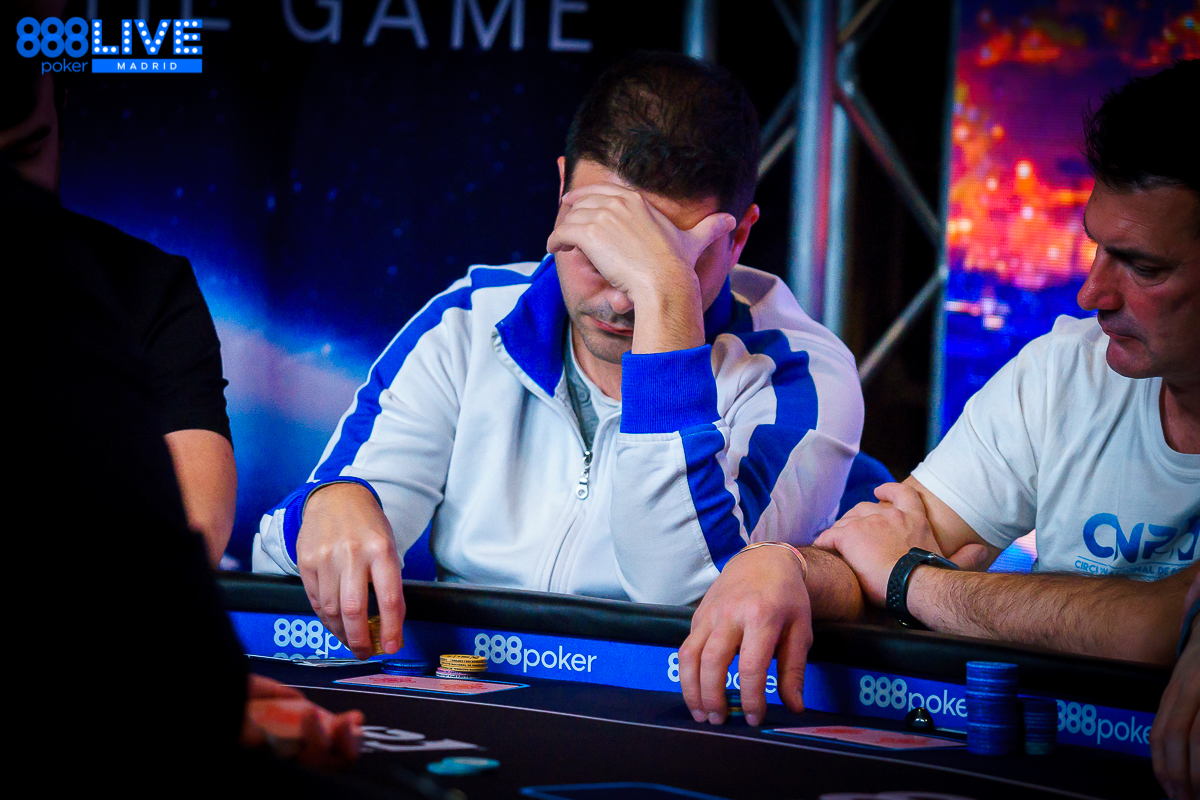
The biggest risk during a downswing isn't the variance itself. It's the psychological response to it. After dropping several buy-ins, many players begin making emotionally driven decisions, which extends the downswing well beyond what variance alone would cause.
Knowing the right response to a downswing is not enough on its own. The mental habits that protect your game during a bad run need to be built before the downswing arrives, not improvised during it. Setting rules in advance, reviewing your game regularly, and developing emotional discipline are ongoing practices, not emergency measures.
It's also important not to use variance as a shield against honest self-assessment. Some players convince themselves they're simply running bad when leaks in their game are a genuine contributing factor. If in doubt, assume poor play is part of the problem and review accordingly.
A downswing can also affect mental health more broadly. Persistent low mood, difficulty concentrating, irritability, and significant changes in sleep or appetite are signs that it's time to step away from the tables, and seek support if needed.
How to Handle a Poker Downswing
These are the most effective responses to a downswing:
- Move down in stakes – dropping down protects your bankroll and allows you to rebuild confidence by booking wins at a level where your edge is stronger.
- Review your game honestly – study sessions during a downswing serve two purposes: they improve your play and help shift your mindset back toward logic-based thinking rather than emotional reactions.
- Take a break – stepping away from the tables, even briefly, interrupts the tilt cycle and restores perspective. Time is often the simplest and most effective reset.
- Slow down at the table – give yourself time on each decision. Players on tilt tend to act too quickly, which prevents sound logic from informing their choices.
- Don't chase losses – moving up in stakes or increasing volume to recover losses are two of the most damaging responses to a downswing. Both increase risk at the worst possible moment.
Stop Losses and Volume Limits
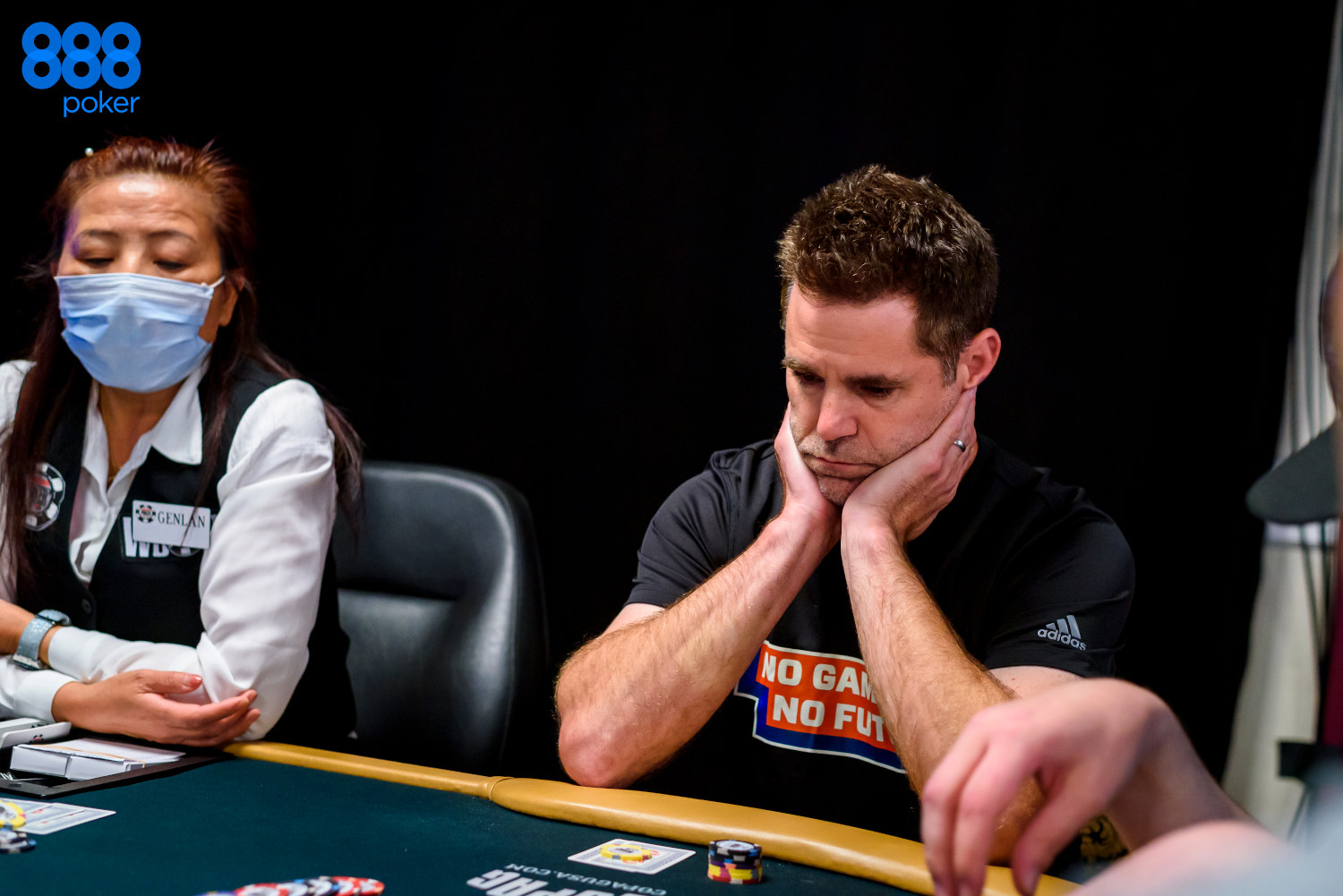
The most reliable way to protect yourself during a downswing is to set rules before emotions are involved.
- Stop loss – set a maximum number of buy-ins you'll lose in a session before quitting for the day. Five buy-ins is a common threshold. This removes the in-session decision of whether to keep playing when you're no longer objective.
- Volume limit – set a maximum number of hours or hands per session. This prevents playing through fatigue, which compounds poor decision-making during a downswing.
These limits work only if they're treated as firm rules. Deciding your stop loss mid-downswing is too late because the decision will be emotionally compromised.
Key Takeaways
- A poker downswing is a mathematically inevitable part of the game, even for strong winning players.
- A player winning at 6bb/100 can lose over 100,000 hands due to variance alone.
- The all-in adjusted bb/100 stat is the clearest way to separate running bad from playing bad.
- Tilt extends downswings beyond what variance causes – emotional discipline is as important as bankroll management.
- Move down in stakes, study, take breaks, and set stop losses before you need them.
- Volume is the only reliable way to let your true win rate reassert itself over time.
