



Stu Ungar had no tolerance for second place. Months before his death in 1998, he put it simply: "People tell me that I should be a good loser. But if you're a good loser, you're still a loser. It's not something that I can ever take."
Coming from the man widely regarded as the greatest poker player in the game's history, it sounded like a reasonable credo for the highly competitive. But with perspective, and given how things ultimately went for Ungar, it's clear the issue has far more complexity than that.
Why Finishing Second Hurts More Than Finishing Third
The psychology of near-wins is well documented. Research cited in Psychology Today shows that Olympic athletes are consistently happier winning a bronze medal than a silver one. The reason: silver medallists compare themselves to the gold winner and feel like losers, while bronze medallists compare themselves to everyone who didn't make the podium at all. The silver medal (the closest thing to victory) produces the sharpest sense of loss.
In poker, this effect is amplified. Unlike team sports, where a runner-up finish is a collective experience, losing heads-up in a major tournament is a solitary reckoning. There is no one else to carry the weight of it.
Gordon Vayo, runner-up in the 2016 WSOP Main Event after a gruelling eight-hour heads-up battle with eventual champion Qui Nguyen, described the aftermath plainly: "For like six months after the final table, I didn't go a day without thinking about how it all played out. Coming to terms with the critical hands that I lost was the most difficult part for me. I kind of disappointed myself."
What kept the loss in perspective was the tangible impact of the $4.6 million second-place prize. "The voice in your head is never going away," Vayo acknowledged. "But once a couple things happen you're like, 'Holy shit, I would never have been able to do this without finishing second in the Main Event.' Then you start to appreciate things a little more."
Phil Hellmuth: The Agony of Almost
No player in poker history has more WSOP bracelets than Phil Hellmuth. And, perhaps not coincidentally, no player has more second-place finishes either. For Hellmuth, runner-up status is not just a statistical footnote. It is a recurring wound.
"Among my worst experiences was finishing second in the WSOP $5,000 No Limit Hold'em event in 2006," Hellmuth has said. He was heads-up against Jeff Cabanillas, a player who never came close to replicating that result, when a key hand slipped away. "There was a hand in which I had two 4s; the flop came 8, 10, Jack. We got a lot of money in, and a flush card hit on the river. I folded to his Ace-King. It was a shame because I was playing above the rim that day."
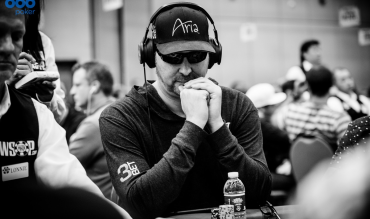
If one second-place finish could still sting years later, the 2011 WSOP was something else entirely. Hellmuth finished runner-up on four separate occasions that summer. His public reaction charted the full arc of a man at war with himself.
After his first second-place finish (to John Juanda at a $10,000 deuce-to-seven event) Phil Hellmuth described feeling "completely awful and inconsolable." Ten days later, after narrowly missing at a seven-card stud hi/lo final table, he reported being "not as depressed" as before. Progress, of sorts.
Then came the moment the wheels came off completely. Hellmuth held an eight-to-one chip lead heads-up against Brian Rast, and lost. His response was to seek out the most expensive bottles at the Aria high-limit bar: Macallan 25 and Louis XIII. It said everything his tweets that summer couldn't quite bring himself to say directly. He had earned more than $1.5 million that summer. He had no bracelet. It was not enough.
Sammy Farha and the Most Famous Runner-Up Finish in History
In terms of cultural footprint, no second-place finish in poker history has matched Sammy Farha's loss to Chris Moneymaker in the 2003 WSOP Main Event. Farha, cigarette dangling, became the enduring image of the runner-up – the seasoned pro beaten by the amateur who changed the game.
Speaking about it not long after, Farha offered his account without much restraint. "He had more chips than me, but, believe me, he would have taken less than half the money," he said, referring to a deal Moneymaker declined.
What followed was a hand Farha has replayed ever since. "I flopped top pair, he had a draw and re-raised on Fourth Street. I set him up to do exactly what I wanted. My problem was that I was tired. I drank 20 Bulls and 20 cups of coffee – you can imagine what that does to your brain. I was in, like, a coma and I backed up. Chris went all-in, and I started counting my chips and thinking about it. I should have called right away."
The bitterness was real and it lingered. In the years that followed, Farha's tournament earnings averaged just over $100,000 per year – a long way from the $2.5 million that Moneymaker took home that night.
Jay Farber: How to Finish Second and Mean It
Jay Farber may be the finest example in poker of how to handle a runner-up finish. Not because he wasn't affected by it, but because of the deliberate way he chose to approach the whole experience.
Farber was a nightlife host from Las Vegas who made the November Nine in 2013 as a genuine dark horse. In the months between making the final table and playing it out, he did not tighten his lifestyle. He partied. He celebrated his birthday in the way he always had. "When I go out and party, it is not just having a few drinks," he said. "The night usually ends in a blur."
The piece of advice that shaped his final table experience came from a fellow pro, who told him simply: this will probably only happen once. Enjoy it. Get everything out of it that you can.
Watch footage of the 2013 Main Event final table and you see Farber smiling through almost all of it, either winning hands and losing them. He played like someone who understood what he was in the middle of.
"Finishing second is the best feeling in the world and the worst feeling," he said afterwards. "It's all a heartbreaker if you don't win, but getting that close can really break your heart. On the other hand, I came in as an unknown, people underestimated me, and I showed that I belonged."
The depression came anyway – about a week of it, by his account. He asked his friend Ben Lamb, who had finished third in the 2011 Main Event, how to get through it. The answer was simple: give it time. It passes. "I played well, and that was all I could have hoped for."
With more than $5 million in winnings from the run (a portion of which went to backer Dan Bilzerian, who had bought a piece of Farber), he arrived at a conclusion that distinguishes him from most players who have sat in the same seat: "A lot of tournament players are miserable people. I would never want to be one of them."
What Runner-Up Records Actually Tell You
There is a useful parallel beyond poker. In golf, Jack Nicklaus holds the record for the most second-place finishes of any player in major championship history. His runner-up is Phil Mickelson. The pattern is not a coincidence. Logging high numbers of near-wins tends to indicate the same thing as logging high numbers of wins: sustained presence at the top of a field.
The same logic applies in poker. Hellmuth's catalogue of second-place finishes is inseparable from his record bracelet count. You cannot consistently finish second without consistently reaching the final stage of elite competition.
That does not make the loss easier to absorb. But it does change what the loss means.
Key Takeaways
- Finishing second in poker triggers a sharper psychological response than finishing third, because the loss is framed as near-victory rather than near-the-top.
- The most common long-term effect is rumination on specific hands, not the result as a whole.
- Financial scale helps with perspective, but does not eliminate the mental replay.
- Players who approach a final table as an experience to be present in – rather than only a result to be won – tend to process the outcome more healthily.
- A high volume of second-place finishes in major tournaments is a marker of sustained elite performance, not a failure pattern.
- The most damaging version of finishing second is finishing second with regret about your own play. The result is fixed. The process is where the real audit happens.
Updated on April 1, 2026
