


Poker tournament strategy for beginners comes down to three habits: apply pressure in the right spots, play a tight range of strong hands from the right seats, and understand that tournament prize pools reward finishing first far more than scraping into the money. Get those three right and everything else in your game has somewhere solid to grow from.
Amanda Botfeld won the first poker tournament she ever entered, and landed a book deal for A Girl's Guide to Poker a year later. A handful of adjustments got her there, and they're all things a new player can apply this week. Here's how they work on 888poker.
What Makes Tournament Poker Different?
A poker tournament is an elimination game. Everyone starts with the same stack, the blinds go up on a clock, and you play down to a single winner. A late registration period usually lets you re-enter if you lose your chips early, but once it closes, getting stacked (the poker term for being eliminated) is final.
That clock is the thing cash games don't have. In a cash game you can sit and wait, because the blinds never change and you can top up your stack whenever you like. In a tournament, the blinds and antes climb every level, so sitting and waiting slowly costs you your stack whether you play a hand or not.
Two questions decide everything you do at the table:
- Can you secure a spot at the final table?
- Can you outlast everyone left after that?
Survival is the frame. Tournaments are more competitive by nature, and they ask for a steadier temperament than cash games do.
How Aggressive Should a Beginner Be?
More aggressive than feels comfortable, and far less aggressive than "all-in every hand". The rising blinds mean chips you don't win get taken from you, so passive play is a slow exit. Waiting for premium poker hands to carry you to the final table almost never works, because you won't be dealt enough of them.
The Short-Stack Rule
Once your stack drops to around 10 big blinds or fewer, moving all-in preflop becomes your main weapon. At that depth there aren't enough chips left to play a hand out after the flop, so the choice simplifies to shoving or folding. That's the idea behind Kill Phil: The Fast Track to Success in No-Limit Hold 'em Poker Tournaments, the book Amanda credits with the biggest jump in her results. It gives inexperienced players a push-or-fold framework so they can compete with stronger opponents without needing to outplay them after the flop.
The book's system applies to short stacks. It isn't licence to shove a deep stack with any two cards, and treating it that way is the fastest route out of a tournament.
Applying Pressure with a Healthy Stack
With a deeper stack, aggression means raising and re-raising rather than jamming. You take the initiative preflop, you continuation-bet flops that favour your range, and you pick occasional spots to bluff in poker where the board and your opponent's line make it credible.
- Tactically, you want to be the player making the last decision in a pot.
- Temperamentally, you need to be comfortable putting other people to hard decisions.
Being slightly over-aggressive costs a beginner less than being passive. The habit becomes more selective as you improve, but the personality requirement stays the same.
Which Hands Should You Play in a Tournament?
Roughly 15% to 20% of the hands you're dealt, which means folding at least 80% of the time. Preflop raise first in (RFI) charts tell you exactly which of those hands to open from each seat. You can find them on 888poker here.
Amanda studied these charts before her first tournament win, and turned them into more than 180 colour-coded flashcards so she'd know which hands to play from which seat without thinking about it.
Play Better Cards Than Your Opponents
Hands like Ace-Three or King-Seven suited look playable and mostly aren't. Outside late position, where most players have already folded, these weaker poker combos lose money in exactly the way beginners hate: you make top pair with King-Seven and your opponent turns over King-Queen.
There's a distinction worth holding onto here. Shoving a hand like King-Seven as a short stack is a different decision from calling a raise with it as a deep stack. The first is a fold-equity play, the second is a value proposition you'll usually lose.
Discipline is the edge. Most players at a beginner table can't fold two suited cards and end up playing far too many hands. If you're still learning which starting hands belong in which category, a poker cheat sheet is a useful thing to have open while you play.
The short version: play few hands, and play them aggressively.
Why Does Position Matter So Much?
Acting last gives you information nobody else at the table has. You see what your opponents have done before you decide, which tells you something about their hand strength and how they've read the poker board. You're far less likely to be surprised by someone waking up with a better hand.
That's why RFI charts give you a different range for every seat. You open tight when you're first to act and much wider when you're one of the last, because the number of players still to act behind you changes what you can profitably play.
Position takes a while to feel natural. Following the charts gets you playing correctly before you fully understand why, which is a reasonable place for a beginner to start.
How Do Tournament Payouts Work?
Only the top 10% to 15% of the field gets paid, and the prize pool is heavily weighted towards the top few places. A min-cash typically returns a little over your buy-in. The places that matter sit at the very top of the ladder.
Two things follow from that structure:
- You'll be eliminated with nothing the large majority of the times you play, and that's the normal experience for everyone, including strong players.
- Playing to survive into the money costs you the equity that makes tournaments worth entering in the first place. Play for the win.
Field size matters too. Beating 100 players is a very different proposition from beating 1,000, and the bigger the fields you enter, the longer the stretches without a result you should expect. Only ever play at stakes you're comfortable with, and treat the buy-in as spent the moment you sit down.
Should You Take a Chop or Play It Out?
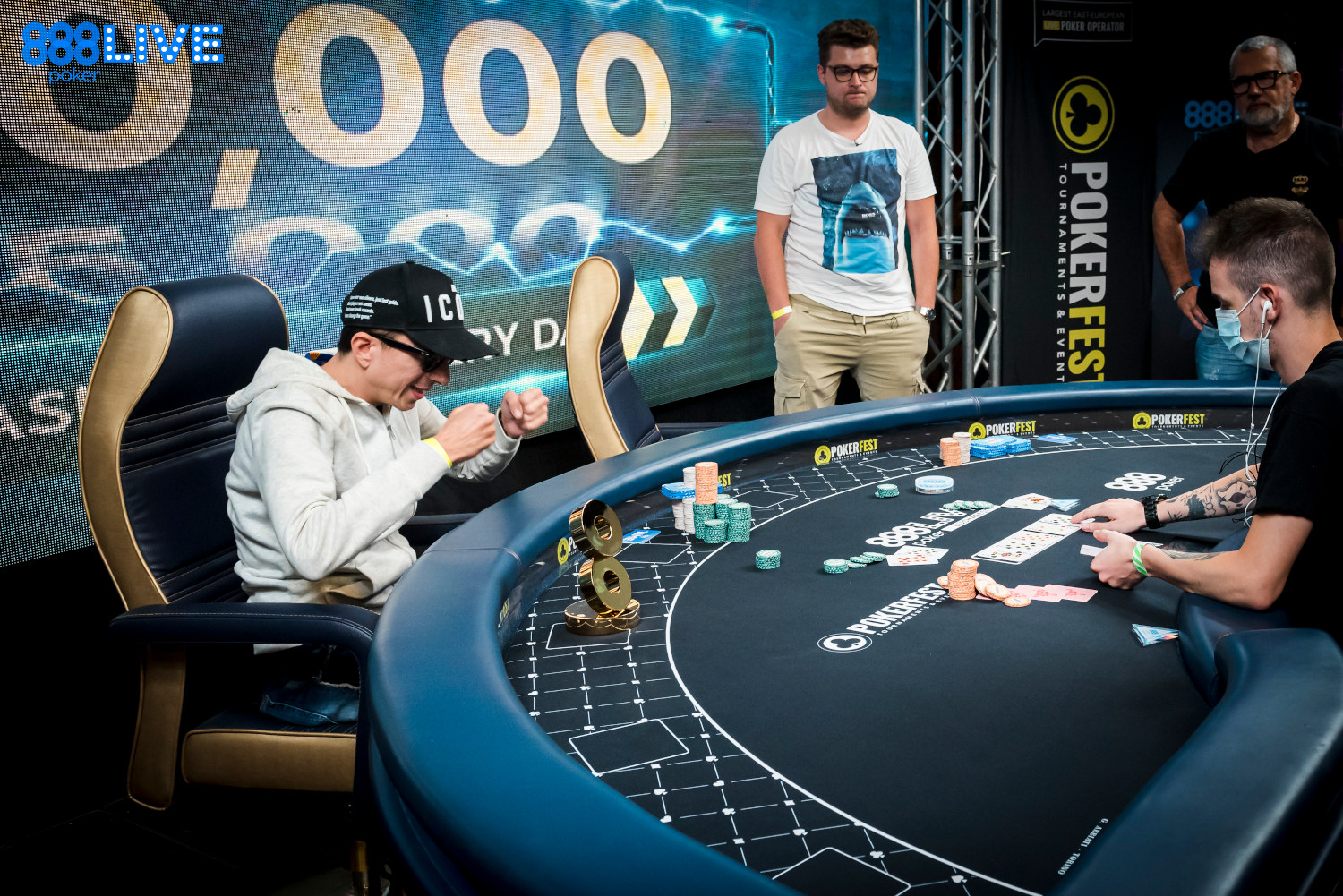
A chop, in poker lingo, is a deal to split the remaining prize pool proportionally instead of playing down to a winner. At local tournaments many players treat them as automatic, usually because the event has run late and they don't want to play a long heads-up match they have little experience of.
The Rule to Remember
Only accept a deal that pays you around second-place money or better. Below that, you're giving away the part of the ladder that makes the whole tournament worth playing.
Chops aren't decided by majority. If one player refuses, play continues, which means every player at the table has a veto and every player has room to negotiate. Amanda was once at a final table where everyone else wanted a deal and she was offered fifth-place money, in line with her chip stack. She refused, held out for a second-place payout, and they eventually agreed.
Her first tournament win happened for a related reason: the player she was heads-up against wouldn't discuss a deal at all.
Key Takeaways
- Rising blinds mean passive play loses chips on its own. Aggression is the default setting in tournaments.
- At around 10 big blinds or fewer, your decision simplifies to shoving or folding preflop.
- Play about 15% to 20% of your hands, and use RFI charts to decide which ones from which seat.
- Acting last is worth more than most beginners realise, so widen your range in late position and tighten it early.
- Prize pools are top-heavy. Playing to survive into the money leaves the value on the table.
- Never accept a chop for less than roughly second-place money, and remember a single refusal keeps the tournament going.
